posts

Surprise! New Kid Lightbulbs double feature:

any day now //
wireless area network

Two songs about AI and/or god complexes, from two different perspectives. First taste of album 5. Free / pay what you want. Out now. Links👇

Bandcamp: https://kidlightbulbs.bandcamp.com/album/any-day-now-wireless-area-network

Subvert: https://www.subvert.fm/kid-lightbulbs/any-day-now-wireless-area-network

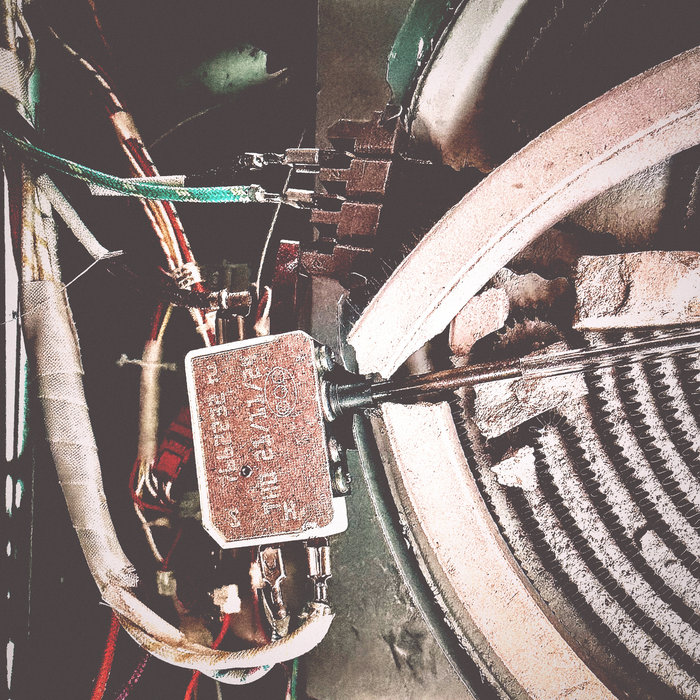
Fun fact: the cover art is a picture of the inside of my stove, which I recently fixed by hand, something I enjoyed doing without the help of AI.

I’m so tired of the ai music discourse but the one hill I will die on is simply that it seems the vast majority of people trying to defend ai music seem to either (1) not have interesting music taste & simply want to make things that sound like what they know without learning how, or are (2) desperately trying to be/stay culturally relevant and it’s not about the music at all

Announcing inbox & chill

I built the menubar notifications inbox of my dreams 🤩

I got tired of having to bounce across a bunch of different apps to keep up with all of my notifications, across both work and nonwork. Plus having to keep track of to-dos and projects on top of it.

read in full →
2026-08-27announcements, tinkering and 1 other

Unstream mission, values, operating principles

First, some context: I’ve been reading Eric Ries’ new book, Incorruptible, and it’s really challenging me to think about the work I do and how to keep it in pursuit of things I care about. I am grateful once again to be employed by a company which acts as if it’s been following the guidance in this book for most of its journey.

With Unstream, I am in control of its destiny (at least today). I don’t have any plans to incorporate it as a business anytime soon, but given my recent admission of a larger ambition I have for it, I felt compelled to put together a mission, vision and values statement for the project. I realize that writing this down is nothing special on its own, but writing this down also gives me something to guide me and hold myself to, and potentially others in the future.

read in full →
2026-08-09unstream, independence

You know what’s better than “winning”?

Making people’s lives better.

Ambitions for Unstream

I had a moment of clarity about Unstream over the last few days, which was triggered by my desire to build some other product that might be viable as a revenue-generating side business. The challenge with that other idea is that, while I do think it could generate side income, getting it off the ground requires a lot of work – even in 2026: finding initial users, facilitating a process akin to sales development (barf), standing up acquisition and retention marketing functions that don’t look like slop but aren’t as close to my personal interests, continuing to support a product that I might lose interest in over time. This would require a lot of time and (more importantly) focus that I simply cannot afford to give right now, if I want to be good to my family and myself (cough cough make some music for once).

Unstream, on the other hand, is a pure passion project that I’ve been able to both build and talk about quite naturally as part of what I think about as a builder and creative person. Its reach is low, but there are some obvious things I can do to expand its reach. Plus, I have a few ideas to make it a much more ambitious thing, and even something music fans might be willing to financially support as a light-but-useful utility, all with the original goal in mind of reinvigorating direct support for the arts. I could see myself continuing to build on this thing over time.

read in full →
2026-07-31unstream, personal and 1 other

Building things on my own has deepened my appreciation for every other function around me I’m not good at 🙇‍♂️

If you’re a PM and want to build some kind of app on your own with AI, do it for this reason and this reason alone. You’ll be better.

In somewhat related news: I learned recently that one of my side projects (Unstream) had

  • its entire caching layer broken for weeks
  • a pretty gnarly race condition bug
  • a few design polish things that quietly worsened after adding a feature a few weeks ago
  • basically stopped growing because I wasn’t continuing to promote it outside of my semi-automated pipeline

AI already helped me fix a few of these, and I now have a few recurring checks in place for preventing stuff like this, but - man - building an actually good software product is a lot and we don’t talk about this nearly enough

Ever wanted to see your content calendar on an actual calendar?
Ever wanted to integrate your social posts into your website or newsletter?

Well, I built another thing for that!

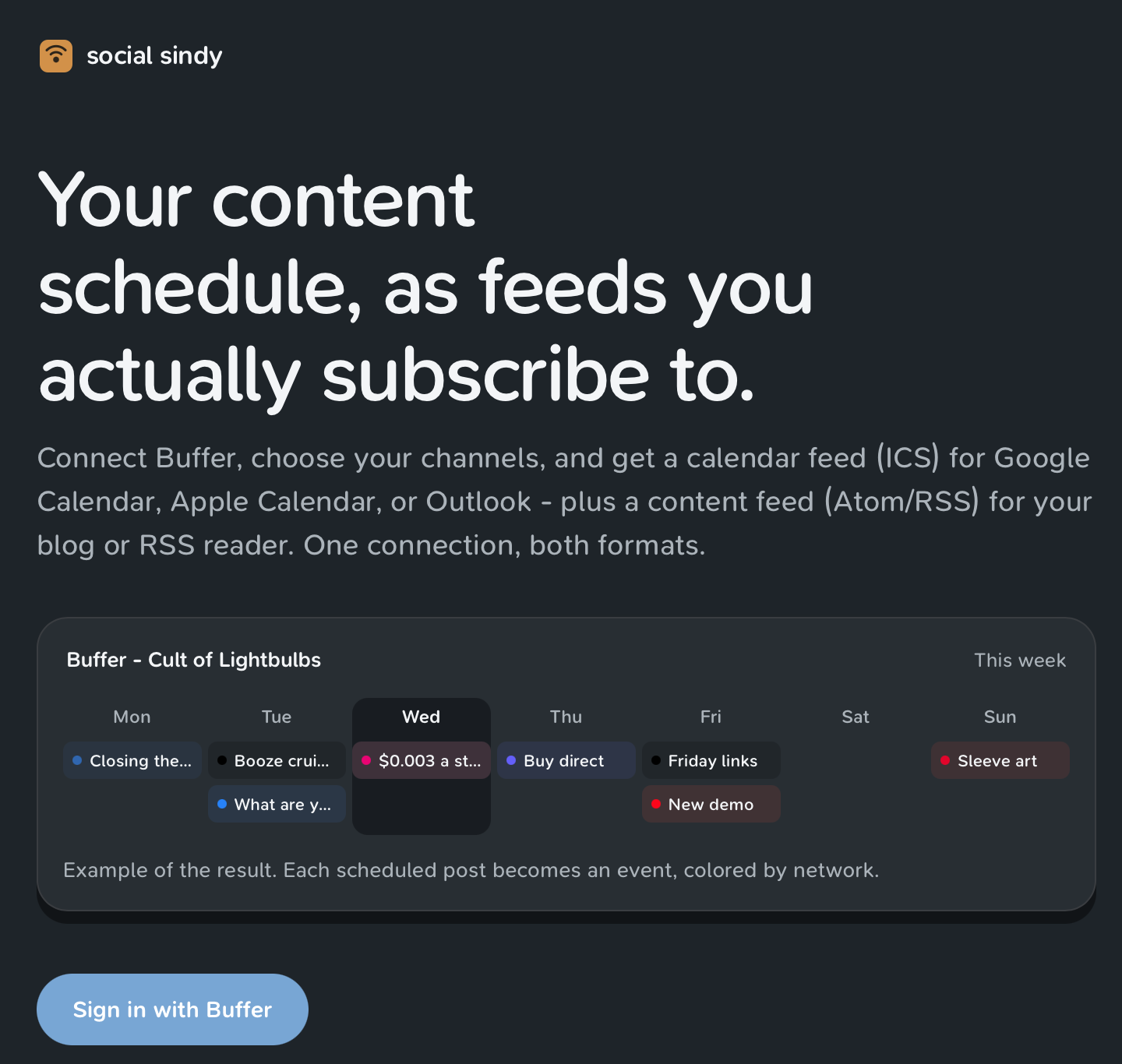
It’s called Social Sindy. The easiest way to turn your social content schedule into an RSS feed or calendar integration 🗓️ 📡

All powered by the @Buffer API 💁‍♂️

Just sign in with your Buffer account, create a feed of either type, choose which social channels and types of posts you want in the feed, and plug in the resulting feed wherever you want to use it.

I was inspired by my recent explorations into RSS and other open formats. I have already found it useful to quickly spot-check on my calendar what posts I have scheduled for the upcoming week, and I even set up my RSS news reader with a feed so I can casually scroll through posts I’ve made in a nice, minimal reading interface.

Try it out (link in comments) and let me know if you have any feedback!

It’s rare these days to find a SaaS company that deeply invests in its user experience design.

And I get it! Many are under pressure to grow, grow, grow at all costs to maximize (often short term) returns). And sometimes you need to cut corners and ship, or trade off UX quality in favor of dark patterns to contribute growth.

It’s unfortunate that many companies inevitably force themselves into making these tradeoffs. I feel AI has almost made this worse, because the expectation is to deliver more value even faster than before, which in turn comes with more tradeoffs made.

I am grateful that we don’t have to do this at @Buffer.

Because we’re independent, profitable, and focused on the long-term with no exit plan, we can actually afford to take more time to really workshop our product before rolling it out to customers.

Rather than rushing to production, we test quite a lot internally – this isn’t abnormal, but I’ve often felt that dogfooding is more of a formality than something teams really take to heart. On our team, a feature isn’t feeling right, we pause and rethink it. We show it to our users (via Alpha or Beta programs), and spend the time to really chat with them about how it’s feeling. A few features have been stuck in beta for a while now because we simply haven’t nailed them, and that’s great! For some table-stakes features, it’s not worth rushing something to market that doesn’t feel truly awesome.

This has started to become one way we differentiate ourselves strategically. It’s increasingly a reason why our users say they choose Buffer, and something that helps turn our users into advocates for Buffer themselves.

What does this look like? Some might call it “taste” – but really it’s the willingness to afford the time to really hone that taste. The time to deeply think through opportunity we’re aiming to seize, get very crisp on how we’ll seize it, enable our craftspeople to cook, and make sure the execution within tthe product is excellent, simple, intuitive and (most importantly) distinct.

Early in the life of Music Threads, people would regularly throw around engagement bait posts such as: what is the best 3-album run of all time

And I’m kind of amazed that I never saw anyone suggest the Fleet Foxes run: self titled, Helplessness Blues, Crack-Up

It’s such a good run of rich & increasingly ambitious modern folk music, possibly the best and most interesting of its kind, if anything because it didn’t succumb to the “stomp hey ho” trope we all know it for.

“When I ask CEOs who’ve taken companies public to identify the biggest change they notice before and after, I always get the same answer: Every employee starts watching the stock ticker.

And so a company might preach quality, the CEO might genuinely believe in craftsmanship, and the company may strive to reward great work. But when employees see the stock price crash because of a competitor who ships junk, the temptation is overwhelming to compromise ‘just this once.’ If this juices the stock price, even for a short time, it’s only a matter of time before employees are teaching each other that quality is an unaffordable luxury. We become what the gravitational field rewards, then forget we ever wanted anything else.”

  • Eric Reis, Incorruptible

Whoa this I did not see coming, especially after the layoff news: @Bandcamp implemented the subsonic API so you can take your Bandcamp collection to open-source media players & infrastructure. I just set it up in seconds

Honestly pretty cool, curious what this means for them

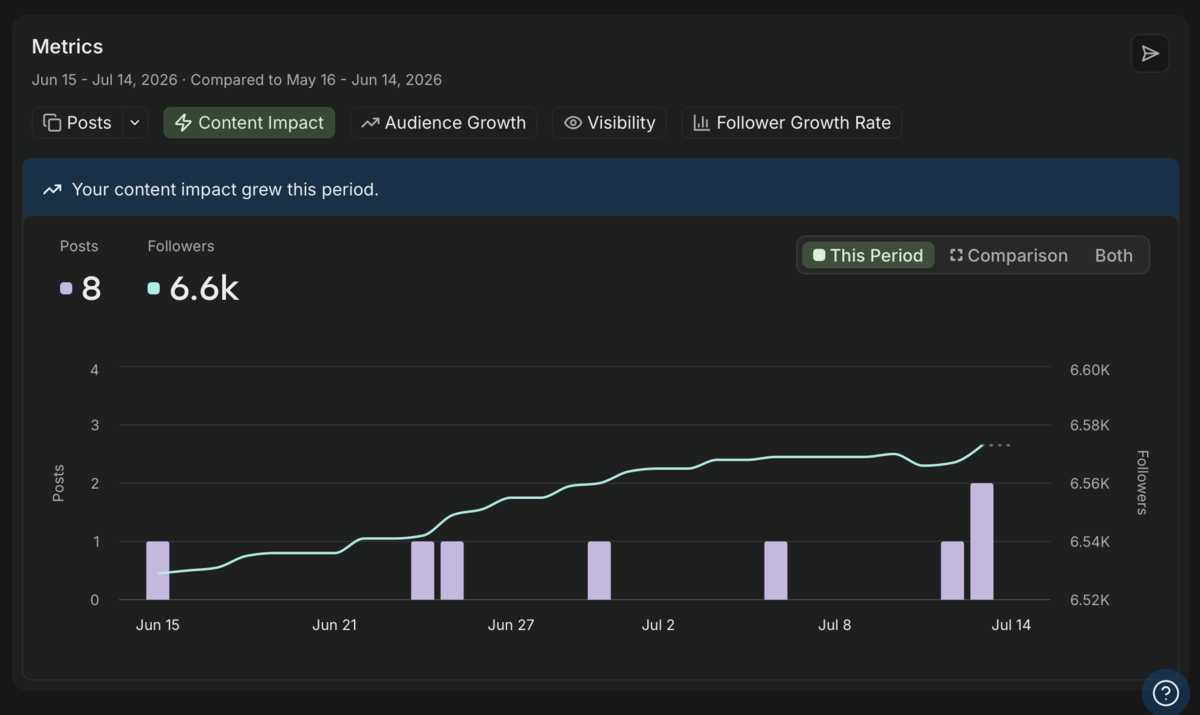
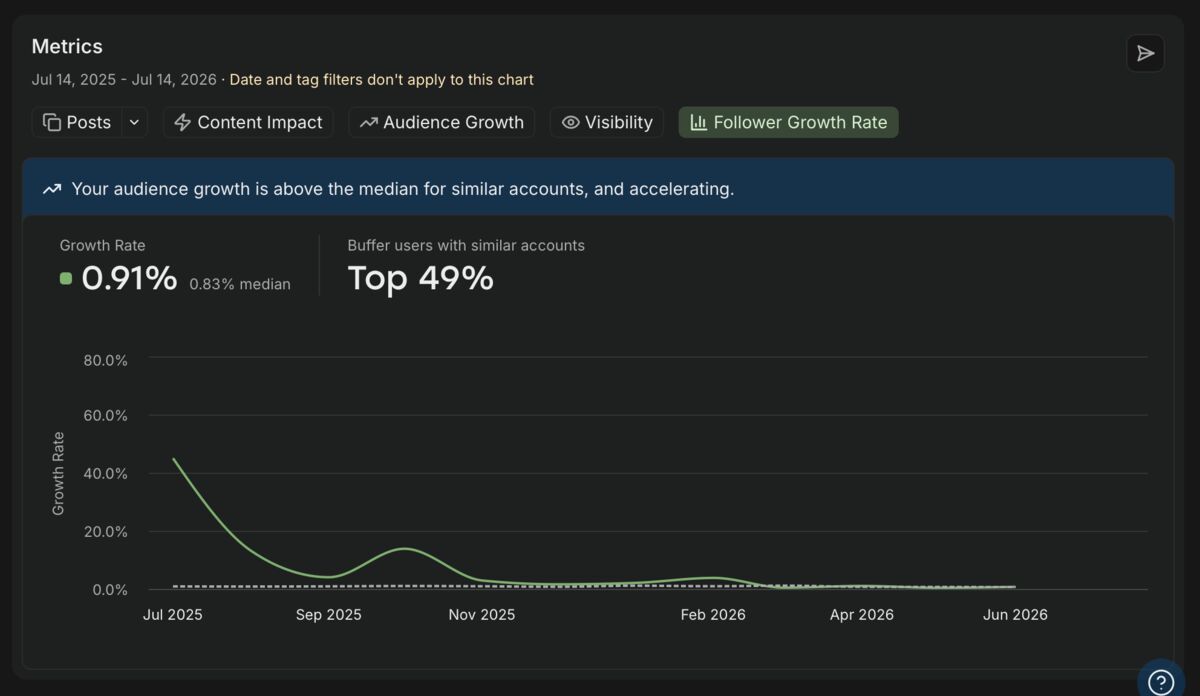
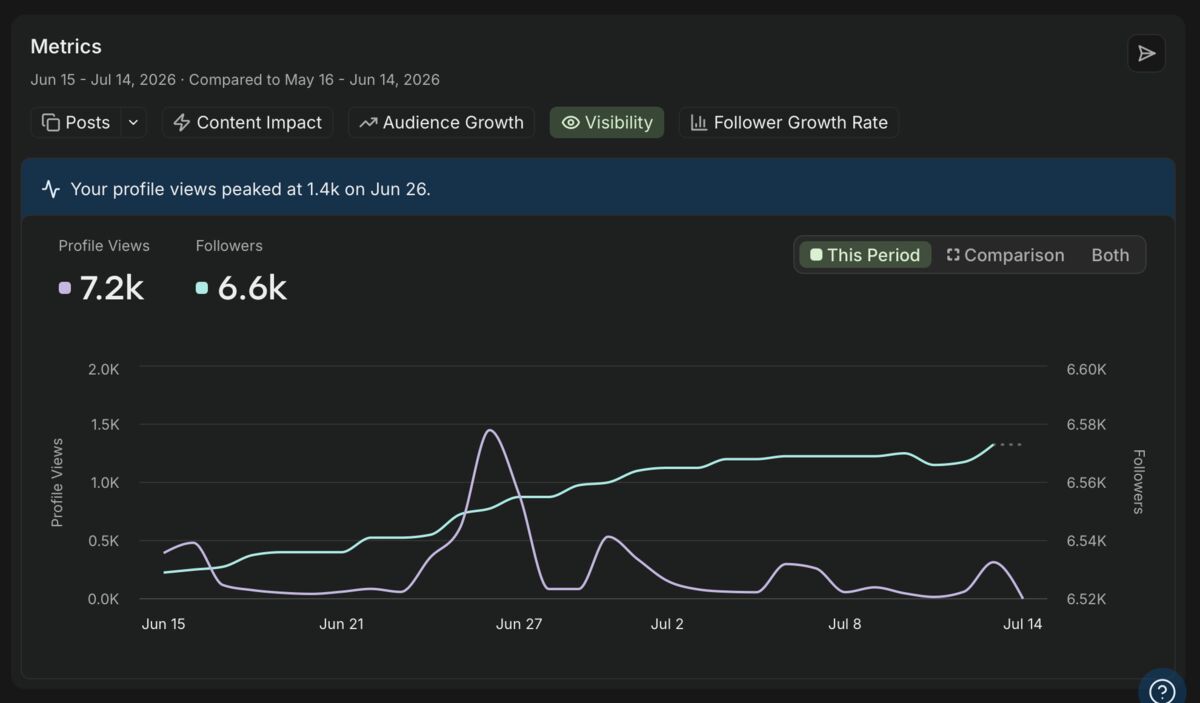
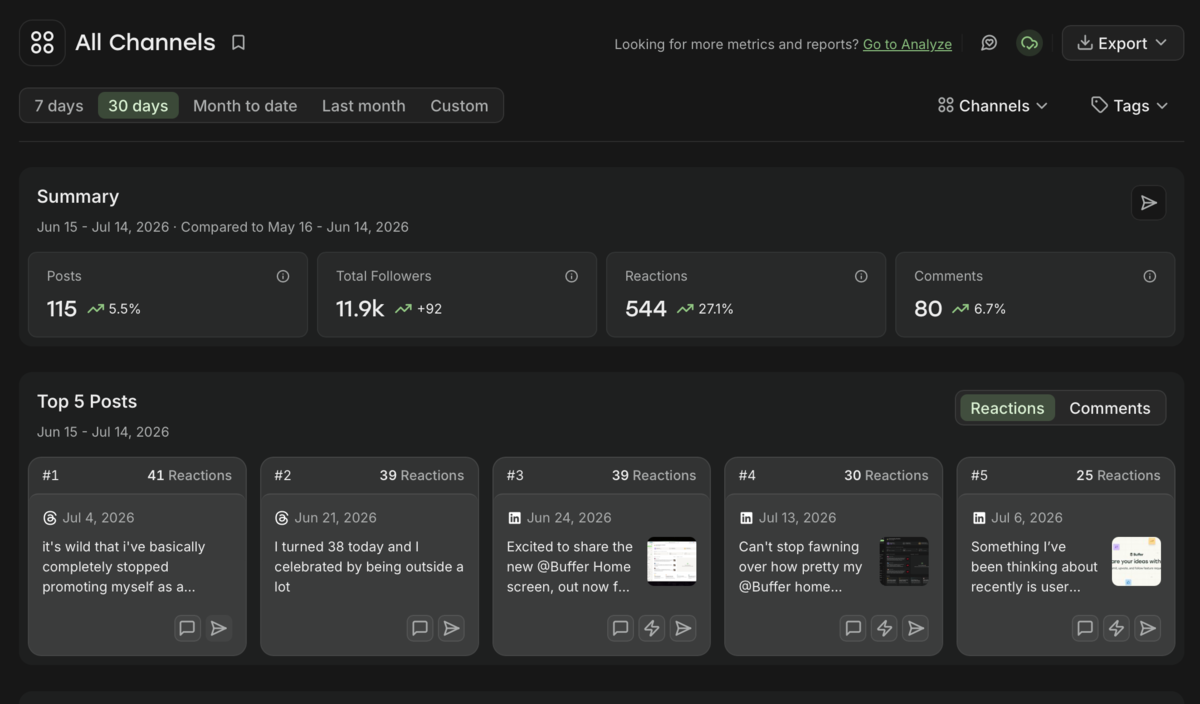
@Buffer Insights is finally here for everyone, and I’m so excited to share it 😄

It’s a total overhaul of social media analytics within our product.

It’s totally free to use, consistent with our strategy to lead with value and generosity (with some nice upgrades on paid plans for social pros & businesses).

It covers just about every social channel you can post to with Buffer.

To me, the best thing: It’s actionable!

With Insights, we want to make all your social data as easy to make sense of, across everywhere you post & engage. So many analytics products throw a bunch of charts at you, or an AI agent that tries to still those charts into a wall of text you might not want to read. Instead, we want to make it clear and easy to figure out your next move on social.

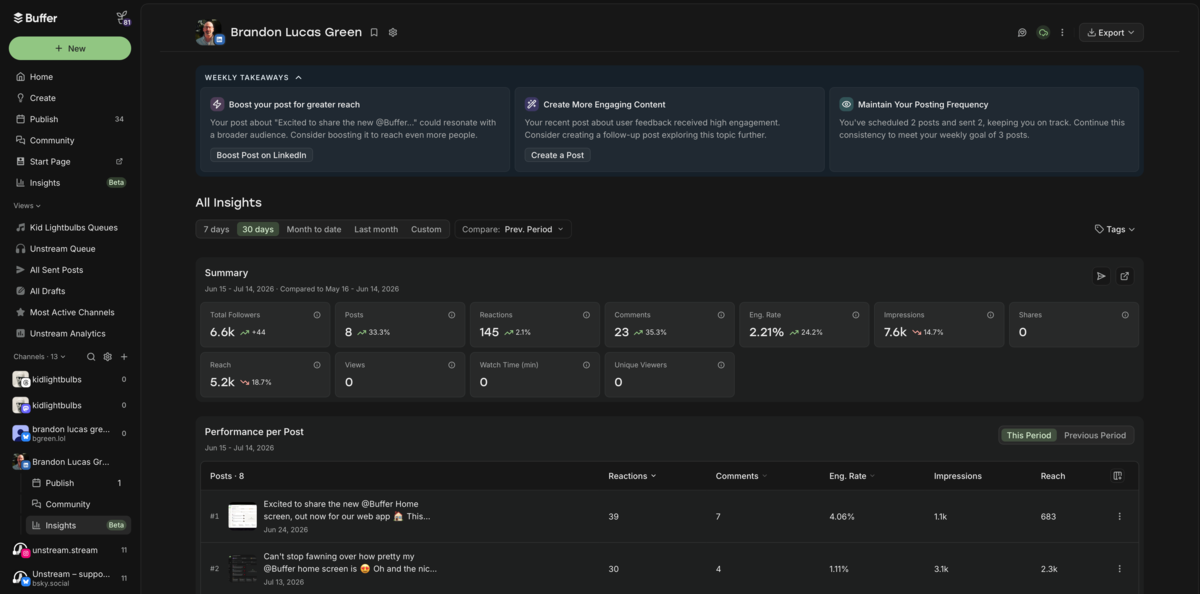
My favorite feature is Takeaways – little suggestions at the top of the page that suggest, for any channel, actions to take based on what we’re seeing in your post performance over the last few weeks. It’s powered in part by AI, but trained by our internal expertise and models around what we’re seeing in social, and doesn’t take your voice out of the content.

And of course, there are plenty of delightful charts 📈 💅

We plan to continue building on this new foundation – so any feedback or ideas for how we can make Insights better for you, just give me a shout!

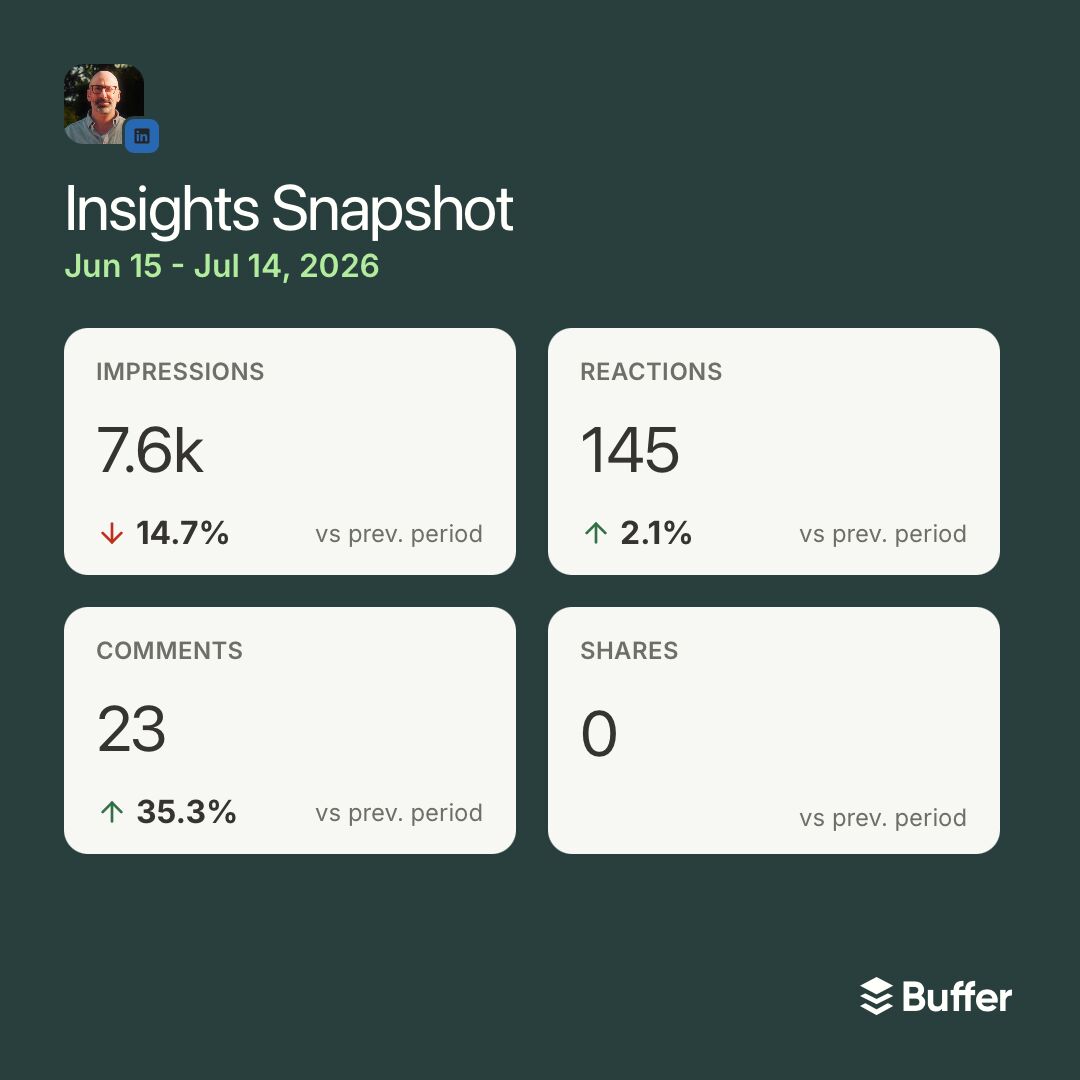
Here’s a snapshot of my performance on LinkedIn from the past month, plus a few other fun snaps of Insights – what is your data telling you your next move should be?

Last week I made a little internal app that makes it easy for anyone on the @Buffer team to roll out a feature to early access.

Does this capability already exist? Sure! We use Split (now @Harness) for feature flagging, and it’s a powerful tool, but it’s UI is…not the friendliest for a less technical person.

More importantly, we want to be sharing more of our work with our users earlier on. We strive to achieve product-market fit & a high confidence in what we ship through engaging with the folks who rely on Buffer, not before we’ve shown it to them. We have multiple programs at our disposal for this – they’re not quite rocket science:

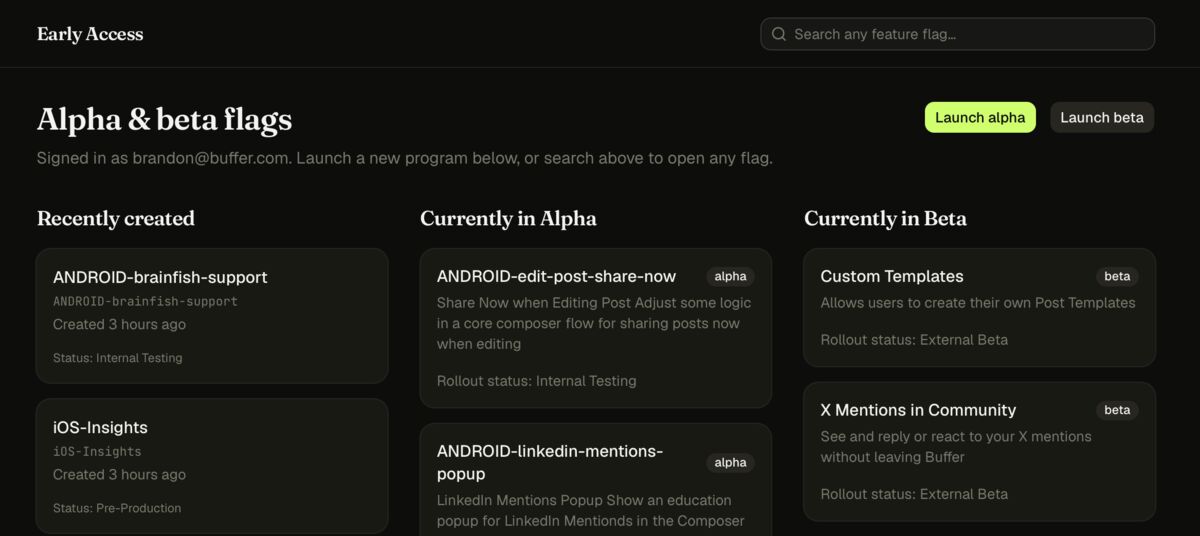
🤫 Alpha is reserved for small, curated user segments (I used to call these “secret features” 😆 ). Especially helpful for a higher-risk change or something for which we need feedback from a particular type of customer. We often invite users in our Discord community to participate in alphas, and we discuss feedback right in the server or over email.

🏊 Beta is a much wider open pool. Anyone can enable Beta features within their Buffer account, and submit feedback directly within the product. We use this for lower-risk or net-new ideas, though we want to get these new ideas in the hands of customers earlier.

Sure, we are a team of creators ourselves! But we don’t represent every possible user of Buffer across our team, and we have our own biases. The input from real users – especially early on – is invaluable.

So I just made the tool we need, thanks to some investment in internal tools infrastructure (shoutout @Hamish Macpherson @Martín García @Miguel David @Peter Emil for your work here!) This little tool makes it possible for anyone on the team – a PM, designer, even a customer advocate working with AI to fix a bug – to quickly roll that change out to our open beta program, or just 1-2 users who might benefit from seeing it early.

And it’s such a nice win-win! Our customers love seeing what we’re working on, and we get such valuable feedback in return. Folks feel seen and get more value early, and we almost always end up shipping a better product.

(by the way: custom templates is in beta, go check it out!!!)
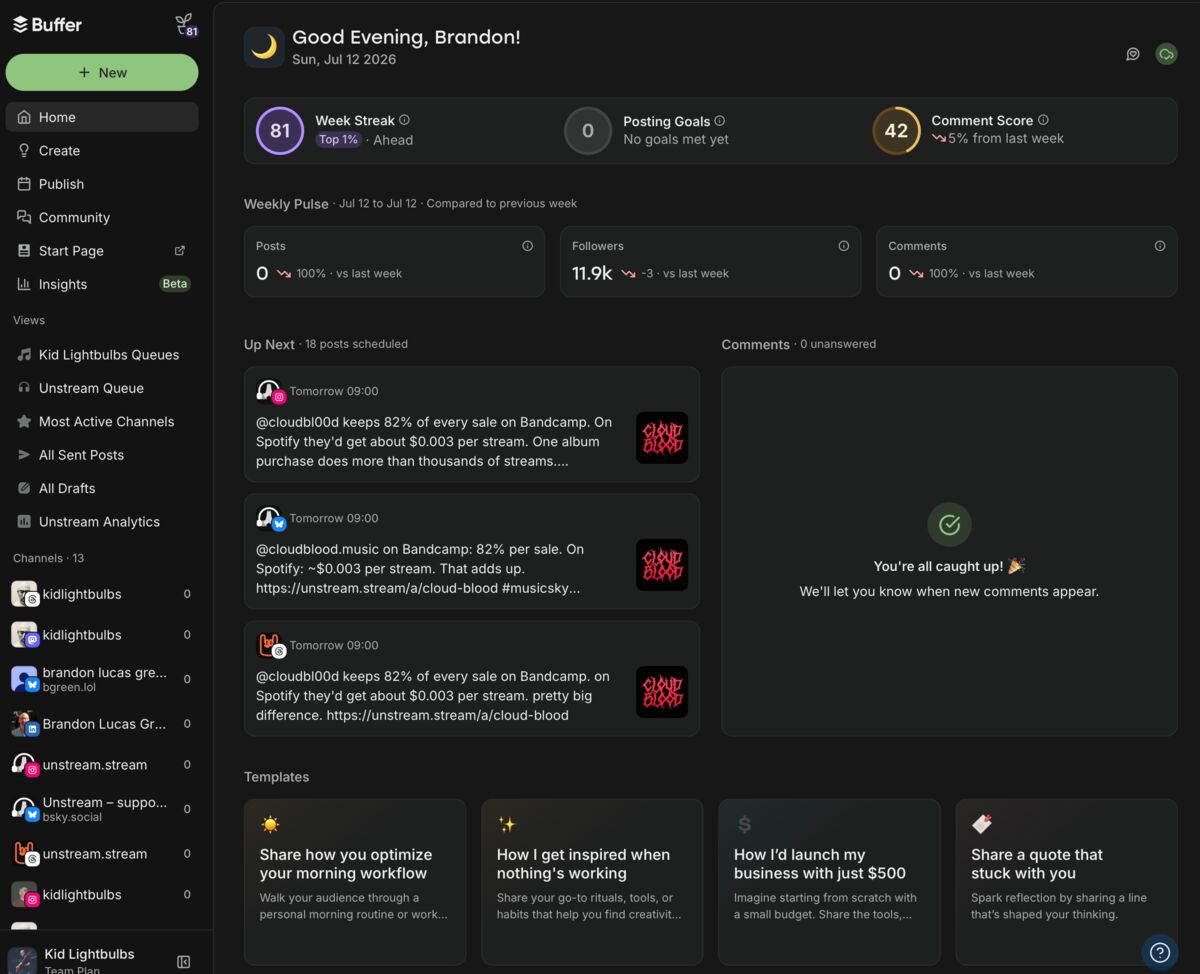
Can’t stop fawning over how pretty my @Buffer home screen is 😍

Oh and the nice li’l saved views in the sidebar 💅

The problem now is that I just stare at this and don’t post stuff 🥴

Corollary: It’s very easy to have your taste & judgment be destroyed by fear of your competition, which it feels like is happening here.

Kind of wild that ChatGPT took this massive step backward, but Anthropic continues to add nice little bells & whistles to Claude/Claude Code that feel right at home (at least to me)

unstream v2.5.0 for chrome and firefox rolling out imminently with some improvements to music playback detection across more websites, including #faircamp sites and @fairplayer!check it out at https://unstream.stream

Something I’ve been thinking about recently is user feedback. How do people handle it these days in the ✨ age of AI ✨?

When it’s so cheap to build, do teams just skip the feedback process and try a bunch of stuff to see what sticks? Do you ship stuff as an “experimental preview” and hope to collect feedback then? What does that process look like? Do you take suggestions, and if so, do you act on them? (Do you even have time these days to review the suggestions you get???)

We’ve been doing a mix of all these things at @Buffer. Transparency has been in our DNA for over a decade, so we aim to both share what we’re building and stay as close to our users to ensure we are meeting their needs from the product, as a natural extension of that transparency. This manifests in a few ways:

  • We collect feedback, and entire feature suggestions, directly within the product. We review these daily across a rotation of PMs and designers, and suggestions are public on our Suggestions Board (suggestions.buffer.com) for anyone to upvote or comment on

  • Every support conversation includes a link to book a 15-30 minute call with a rotating member of the PM or design team. We have a few of these every week (I personally have 1 almost every week through this method), and they range from low-level support Q&A to full-on social media strategy sessions… which in turn have enabled (forced?) us PMs & designers to put on our social marketer hats more often 😅

  • Being a team of creators ourselves, we get a ton of feedback both by talking to creators & businesses on the social naturally (I get ideas here on LinkedIn all the time), and from using the socials ourselves

I’ll be honest – two big challenges I’m dealing with lately are:

  1. Moderating a public suggestions board for a product with our reach is pretty challenging! There’s a lot of spam and duplicate requests! We get lots of little niche requests that are hard to solve for at scale! But I consider these good problems to have – feedback is a gift – and there are things we can do to both more efficiently manage the intake and act on the little things.

  2. Being a li’l creator myself gives me perspective on what I want out of Buffer, and with vibe-coding being a thing now, it’s really temping to just build what I want. (Hey, our new public API is meant to help scratch those itches!) Some of it is also what other creators want, but some of our higher-scale customers want very different things. So resisting the urge to just build with sitting with feedback has become even more important in 2026.

So how are you handling feedback from your customers these days?

Free product idea for the @Figma team:
Build your own Loom alternative directly into the product, so designers can walk through their designs without needing a whole other tool / set of links to walk through designs that are already done in Figma

Finally got cross-client login & sync working for Unstream!

This means:

  • anyone can create a user account on Unstream, not just artists
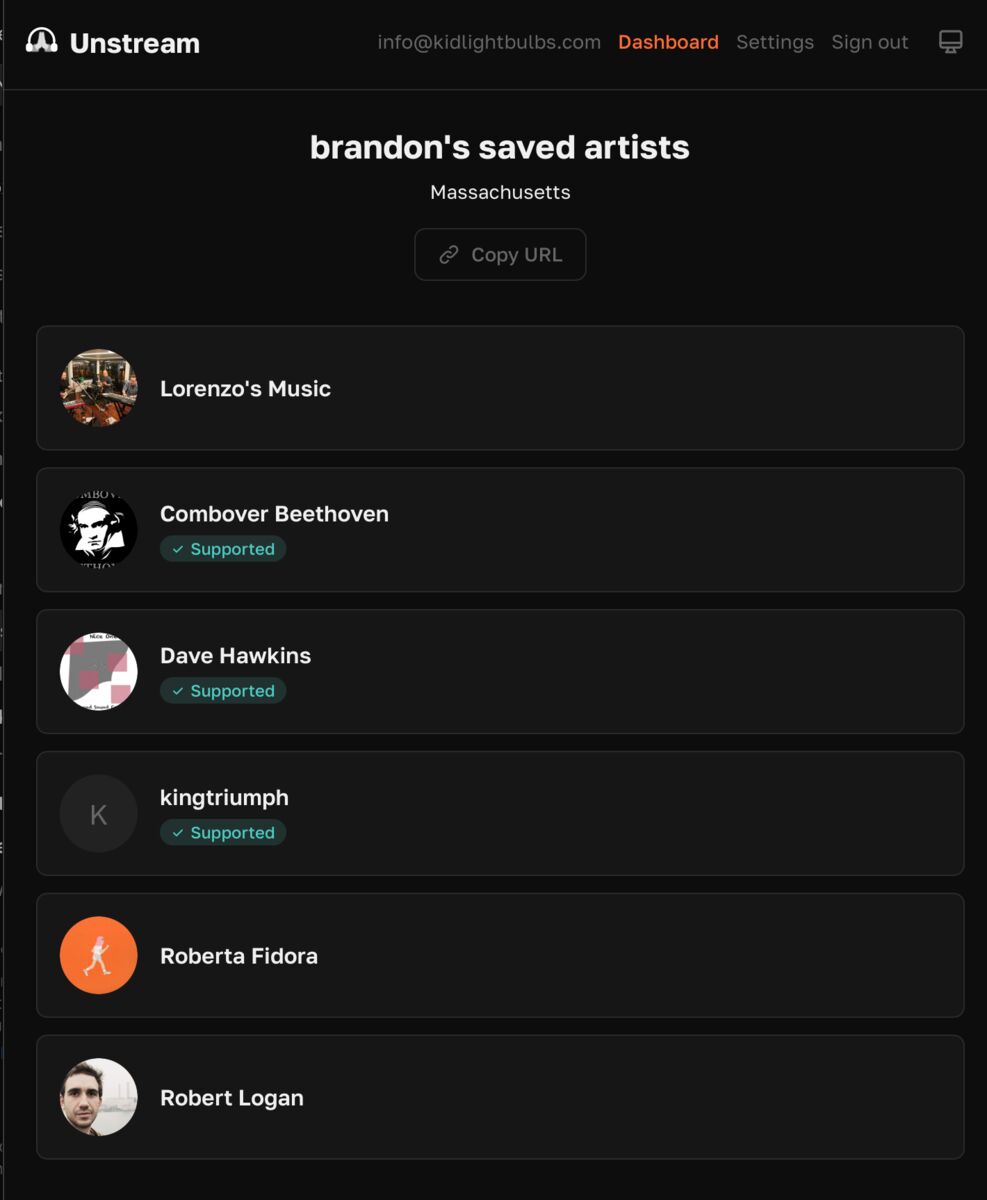
  • you can save artists you want to support on the web app, and those sync to your mac app / browser extension / other devices
  • you can optionally publicize your saved artists list, as a bit of social proof (these are a bit sparse now, I want to add more to these

Czech this all out at https://unstream.stream

#supportindieartists #fairtrademusic #indiemusic

Oh also, artists can still claim their profiles/links as before! So go claim your results and set up a little linktree alternative that focuses on the best places for fans to directly support you